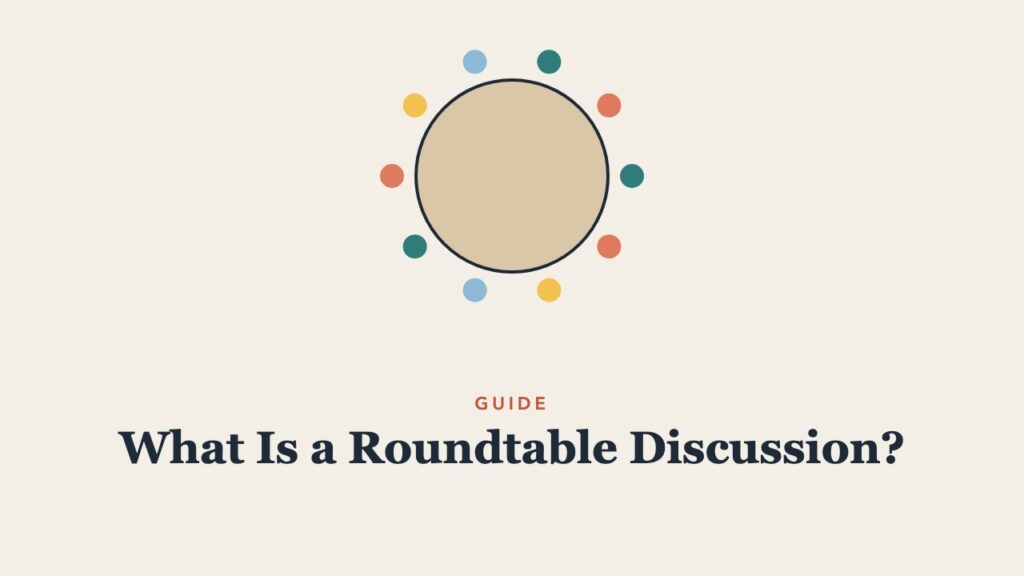
A roundtable discussion gives everyone at the table an equal voice, which is why the format is popular for leadership forums, policy conversations, and conference sessions where peers want to learn from each other. This guide explains what a roundtable is, how it runs, how it compares to a panel or focus group, and how to facilitate one well.
What Is a Roundtable Discussion? (Definition)
A roundtable discussion is a structured conversation among a small group of participants who share ideas on a topic as equals. There is no main speaker and no audience in the usual sense. A facilitator guides the conversation, and every participant is expected to contribute. Roundtables typically involve 6 to 15 people and last 60 to 90 minutes.
The name comes from the legend of King Arthur’s Round Table, where no seat sat at the head, so every knight had equal status. A real round table helps, but the idea matters more than the furniture: everyone is a peer.
How a Roundtable Works
A roundtable usually starts with introductions and a framing of the question by the facilitator. The facilitator then poses a series of open questions, invites responses from different participants, and connects ideas across the group. Some roundtables begin with a short provocation from one participant to spark discussion. The session often ends with a summary of key insights, and many organizations publish a short report afterward.
Types of Roundtables
- Executive or leadership roundtables. Senior leaders from different organizations discuss shared challenges, often under confidentiality rules.
- Conference roundtables. Several small tables run at once during a conference, each on a different topic, and attendees choose a table.
- Policy roundtables. Experts, officials, and community members discuss an issue to inform decisions.
- Academic roundtables. Scholars discuss a book, theme, or question without formal papers.
- Virtual roundtables. A small group meets on video with cameras on, guided by a facilitator.
Roundtable vs. Panel Discussion vs. Focus Group
| Roundtable | Panel discussion | Focus group | |
|---|---|---|---|
| Who talks | All participants equally | Panelists, then audience | Participants, guided by a researcher |
| Audience | None, or observers | Yes | None, but often recorded |
| Purpose | Exchange ideas among peers | Share expert views with an audience | Gather opinions for research |
| Who benefits | The participants | The audience | The organization running it |
See also what is a panel discussion and what is a seminar.
How to Facilitate a Roundtable
- Invite the right mix. Peers with relevant experience and different perspectives. Avoid one dominant expert.
- Frame a focused question. Share it with participants in advance so they arrive ready.
- Set ground rules. For example, the Chatham House Rule (ideas can be shared, but not who said them), brief contributions, and listening to understand.
- Start with everyone’s voice. A quick round where each person answers one question gets everyone talking early.
- Prepare five or six open questions. Move from experiences to insights to implications.
- Balance participation. Invite quieter participants by name and gently redirect anyone who dominates.
- Summarize as you go. Reflect back themes and disagreements so the group can build on them.
- Close with takeaways. Ask each person for one idea they will act on.
Examples of Roundtables
A university hosts a roundtable of ten chief learning officers to discuss how AI is changing workforce training. A conference offers twelve roundtable tables at lunch, each hosted by a volunteer on a topic such as mentoring new faculty. A city council convenes a roundtable of business owners, residents, and planners on downtown development. A professional association runs a monthly virtual roundtable for members who lead small training teams.
Frequently Asked Questions
How many people should be in a roundtable?
Six to twelve is ideal. Up to fifteen works with a skilled facilitator.
How long is a roundtable discussion?
Most run 60 to 90 minutes. Conference table roundtables are often 30 to 45 minutes.
Does a roundtable have a moderator?
Yes, usually called a facilitator or host. Their role is to guide the conversation, not to be the expert.
Is a roundtable formal or informal?
It can be either. Executive and policy roundtables tend to be formal, while conference roundtables are usually informal.
Roundtables succeed or fail on facilitation. The facilitation workshop at InnovationTraining.org builds the questioning and group-balancing skills that make peer conversations productive.