
“Seminar” means something a little different depending on whether you hear it on a university campus or at a professional conference. This guide explains what a seminar is in both settings, the most common types, how a seminar compares to a workshop, lecture, and webinar, and how to run one that people find engaging.
Seminar at a Glance
- Meaning: a focused session or course where a leader guides discussion of one topic with a group.
- Typical size: 5 to 20 people in a university seminar class; larger for professional seminars.
- Typical length: 1 to 3 hours per meeting, or a weekly class for a full semester.
- Example: twelve graduate students discuss an assigned reading on climate policy, with each student leading the conversation once during the term.
What Is a Seminar? (Definition)
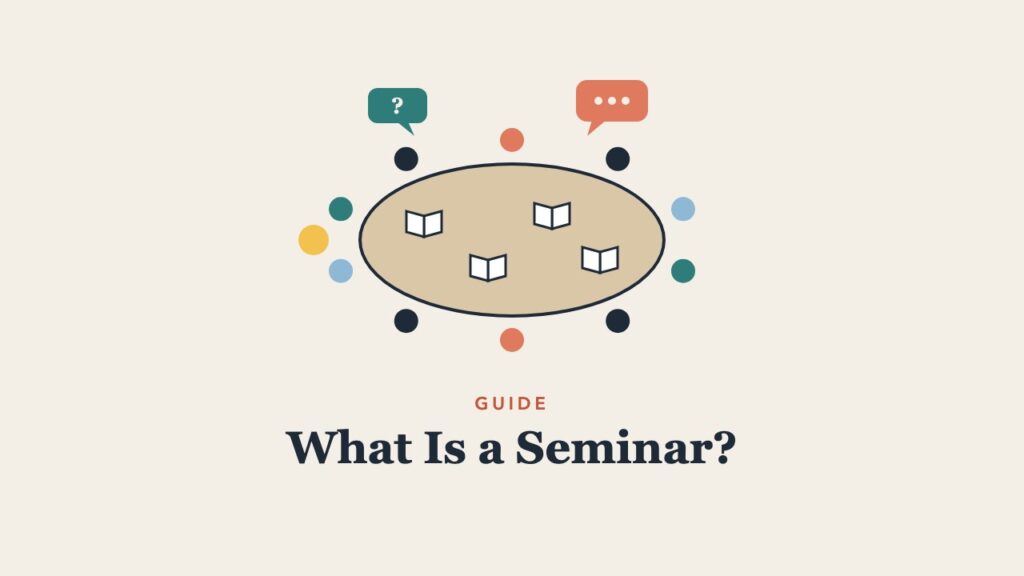
A seminar is a focused session in which a knowledgeable leader shares ideas on a specific topic and guides discussion with a group of participants. Seminars center on learning and conversation. Participants listen, ask questions, and talk through ideas, but they usually do not produce a shared output the way they would in a workshop.
The word comes from the Latin seminarium, meaning a seed plot or nursery. It’s a nice image for what a seminar is supposed to do: plant ideas that grow in the participants after the session ends.
The Academic Seminar
In higher education, a seminar is a small, discussion-based course or meeting. Graduate seminars usually have somewhere between five and twenty students who read assigned material ahead of time and come ready to discuss it, with a faculty member guiding the conversation. Students often take turns leading a session or presenting their own research for feedback. Many departments also host a research seminar series, where a visiting scholar or faculty member presents work in progress and the audience asks questions.
The academic seminar is actually one of the most participatory formats in a university. When it works, the discussion is the learning. I spent a lot of time in these rooms during graduate school, and the best ones felt much closer to a workshop than a lecture, because the professor asked great questions and then got out of the way.
What Is a Seminar Class in College?
A seminar class is a small college course built around discussion instead of lecture. Instead of taking notes while a professor talks, students complete readings or research before each meeting and come ready to share their thinking, respond to classmates, and sometimes lead the discussion themselves.
Here is what to expect in most seminar classes:
- Small size. Usually 10 to 20 students, often seated around one table so everyone can see each other.
- Preparation counts. The discussion depends on everyone having done the reading, so instructors notice quickly when students have not.
- Participation is graded. A share of the grade often comes from contributing thoughtfully to discussion, not only from papers or exams.
- Student-led sessions. Students may take turns presenting a reading or their own research and facilitating the conversation.
- Writing and research. Seminars usually end in a research paper or project rather than a final exam.
Common examples include first-year seminars that introduce new students to college-level discussion and writing, upper-level seminars in a major, senior or capstone seminars where students complete a major project, and graduate seminars where students engage with current research in their field.
The Professional Seminar
Outside of academia, a seminar usually means an expert-led educational event. Think of a half-day seminar on new employment regulations, a financial planning seminar for the public, or a leadership seminar at an association conference. These sessions are typically larger, more presentation-driven, and include a question-and-answer period. The emphasis is on getting current, useful information from someone who knows the subject well.
Common Types of Seminars
- Academic seminars: small discussion-based courses built around readings and student presentations.
- Research seminars: a scholar presents findings or work in progress to colleagues for discussion.
- Professional development seminars: training sessions on a specific skill or topic, often for continuing education credit.
- Conference seminars: breakout sessions led by an expert within a larger event.
- Public or sales seminars: free or low-cost events that educate an audience and introduce a product or service.
- Webinars: seminars delivered online to a remote audience.
Seminar vs. Workshop vs. Lecture vs. Webinar
| Format | What happens | Participant role |
|---|---|---|
| Lecture | An expert presents content to an audience | Listening and note-taking |
| Seminar | An expert shares ideas and leads discussion | Listening, questioning, discussing |
| Webinar | A seminar or presentation delivered online | Listening, with chat, polls, and Q&A |
| Workshop | A facilitator guides hands-on activities toward an output | Actively doing and creating |
For a deeper comparison, including how to choose the right format for your goal, read Workshop vs. Seminar vs. Webinar: What’s the Difference? If you are leaning toward something more hands-on, see What Is a Workshop? Definition, Examples, and How to Design One.
Examples of Seminars
A department of education hosts a weekly doctoral seminar where six students discuss two articles on adult learning theory, and one student presents a draft of a dissertation chapter for feedback. A hospital system offers a two-hour seminar for new managers on performance conversations, with a presenter walking through a model and taking questions. A university career center runs a lunchtime seminar where three alumni share how they moved into careers in user experience design, followed by open questions from students. Each one centers on ideas and conversation more than on creating something together.
How to Run a More Engaging Seminar
Research on adult learning is consistent: people remember more when they talk, think, and apply ideas instead of only listening. You can keep the seminar format and still make it much more active.
- Keep talk segments short. Aim for 10 to 15 minutes of input, then give people something to do with it.
- Use pair conversations. A two-minute “turn to your neighbor and discuss” gets everyone thinking, including people who would never speak up in a large group.
- Ask real questions. Prepare two or three open questions that don’t have a single right answer, and give people time to think before anyone responds.
- Collect questions early. Invite questions throughout on cards or in the chat, so the Q&A reflects what people are actually wondering.
- Add one application moment. Before the end, ask participants to write down how they will use one idea in their own work. That small step moves a seminar toward a workshop.
Shifting from delivering content to facilitating learning changed my own work. I describe it in From Presenter to Facilitator: The Shift That Changed My Work, and the facilitation workshop at InnovationTraining.org helps leaders and experts make that move with their own sessions.
Related Guides
- What Is a Lecture?
- What Is a Colloquium?
- What Is a Symposium?
- What Is a Conference?
- Conference vs. Seminar vs. Symposium
- 60 Seminar and Webinar Topic Ideas
- What Is a Roundtable Discussion?
Related guides: webinar vs. seminar and lecture vs. seminar.
Frequently Asked Questions
How long is a seminar?
Seminars commonly run from one hour to a full day. Academic seminars usually meet for one to three hours at a time over a semester.
What is the difference between a seminar and a lecture?
A lecture is primarily one-way presentation. A seminar includes significant discussion, and academic seminars are built almost entirely around it.
What is a seminar course in college?
A seminar course is a small class, often for upper-level undergraduates or graduate students, where learning happens through reading, discussion, and student presentations instead of lectures.
Is a webinar the same as a seminar?
A webinar is a seminar delivered over the web. It usually reaches more people and has less discussion than an in-person seminar. For more, see our guide to what a webinar is.
Think of the last seminar you attended that really stuck with you. What did the leader do that made it work? If you’d like help designing a session that gets that kind of response, Innovative Workshop Design and Facilitation Coaching offers personal support as you build it.
