“Forum” is used for a public meeting, an annual leadership event, a community listening session, and an online message board. The common thread is open discussion: a forum is a place where people come to share views on an issue. This guide explains what a forum is as an event, the main types, how one usually runs, and how it compares to other formats.
What Is a Forum?
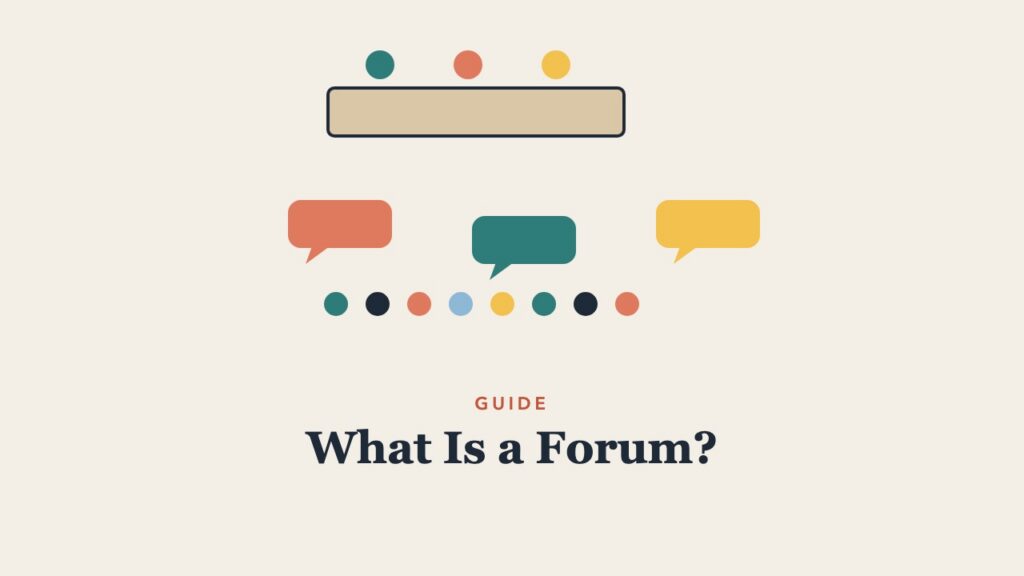
A forum is a meeting or event where people discuss an issue openly, usually with speakers or panelists followed by questions and comments from the audience. The emphasis is on exchanging views rather than delivering a lesson. The word comes from the forum of ancient Rome, the public square where citizens gathered for business, debate, and public life.
Forum at a Glance
| Purpose | Open discussion of an issue; hear multiple views |
| Typical format | Short presentations or a panel, then audience questions and comments |
| Size | 20 to several hundred |
| Length | One to three hours, or a full-day event |
| Led by | A moderator or chair |
| Audience role | Active: questions, comments, sometimes votes or input |
Types of Forums
- Public or community forum: residents discuss a local issue with officials, such as a new development or a school budget. Similar to a town hall meeting.
- Candidate forum: candidates answer questions from a moderator and the audience. Less formal than a debate.
- Leadership or industry forum: a one- or two-day event where leaders discuss trends, often with panels and roundtables.
- Campus forum: a university leader or committee shares a proposal and invites feedback from students and staff.
- Online forum: a message board where discussion happens in threads over time instead of in a room.
How a Forum Usually Runs
- Welcome and purpose (5 minutes): the moderator explains the issue and how input will be used.
- Opening remarks (15 to 30 minutes): one or more speakers or panelists set out the facts and their views.
- Audience discussion (30 to 60 minutes): questions and comments from the floor, with a time limit for each speaker.
- Summary (5 to 10 minutes): the moderator sums up the main points and explains next steps.
Forum vs. Similar Formats
| Format | How it differs from a forum |
|---|---|
| Seminar | Focused on teaching a topic; fewer, more expert participants |
| Symposium | Experts present on a topic; less audience input |
| Town hall | Leaders answer questions from their community or employees; very close to a public forum |
| Debate | Structured opposing sides with rules; a forum is more open |
| Conference | Larger, longer, many sessions; a forum may be one session within it |
Tips for Moderating a Forum
- Set ground rules at the start: time limits, respect, one speaker at a time. See meeting ground rules examples.
- Balance voices. Alternate sides of the room or take written questions so the same few people do not dominate.
- Repeat each question into the microphone so everyone hears it.
- Close the loop. Tell people how and when their input will be used, then follow up.
Frequently Asked Questions
What is the purpose of a forum?
To let people hear different views on an issue and share their own, so decision-makers and the community understand the range of opinion.
What is the difference between a forum and a seminar?
A seminar is mainly about learning a topic with an expert. A forum is mainly about open discussion of an issue, with the audience playing a bigger role.
What is the plural of forum?
“Forums” is standard in everyday English. “Fora” is the Latin plural and appears in some formal writing.