Conference programs list both “keynote” and “plenary” sessions, and the two are easy to mix up because both happen in the main hall with the whole audience. The difference is about the role of the session, not the room. This guide explains what each term means, how they differ, and how they fit into a conference schedule.
The Short Answer
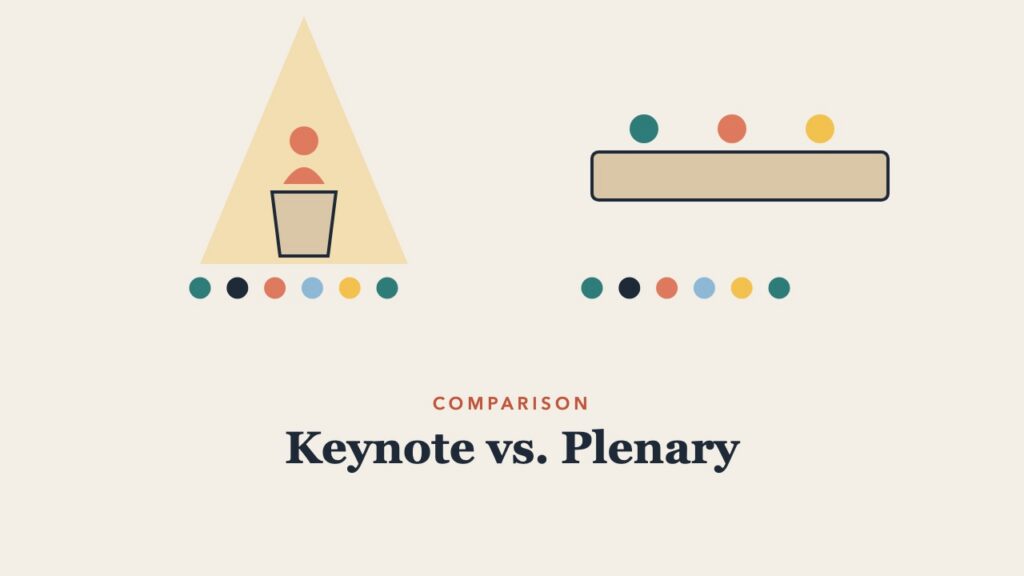
A plenary session is any session that all attendees are expected to attend, with nothing else scheduled against it. A keynote is a featured talk that sets the theme or tone of the event, given by a headline speaker. Most keynotes are delivered in a plenary session, but not every plenary session is a keynote. Plenaries can also be panels, award ceremonies, business meetings, or closing sessions.
Keynote vs. Plenary at a Glance
| Keynote | Plenary session | |
|---|---|---|
| What it describes | A type of talk and speaker | A slot in the schedule |
| Audience | Usually everyone | Always everyone (by definition) |
| Format | Usually one speaker, 30 to 60 minutes | Talk, panel, debate, awards, business, or opening/closing |
| Purpose | Set the theme, inspire, frame the event | Bring everyone together for shared content |
| Speaker | A well-known name or top expert | Varies: leaders, panelists, organizers |
| How many per event | One to three | Several, often one or two per day |
What Is a Keynote?
The term comes from music: the keynote is the note that sets the key for a piece. A keynote speech does the same for an event. It is usually the opening session, given by a speaker chosen to attract attendees and frame the conference theme. Some events also have a closing keynote that sends people off with a message to act on.
What Is a Plenary Session?
“Plenary” comes from the Latin plenus, meaning “full.” A plenary session is a full-audience session. Conferences use plenaries for anything they want every attendee to see: the opening, a keynote, a major panel, research highlights, awards, the annual business meeting, or a closing session. In academic conferences, “plenary speaker” often means an invited senior researcher, a role similar to a keynote.
How They Fit in a Conference Schedule
| Time | Session | Type |
|---|---|---|
| 9:00 | Welcome and opening keynote | Plenary (keynote) |
| 10:30 | Concurrent sessions | Breakouts |
| 12:00 | Lunch | |
| 1:30 | Industry leaders panel | Plenary (panel) |
| 2:45 | Workshops | Breakouts |
| 4:30 | Closing keynote | Plenary (keynote) |
Is a Plenary Speaker the Same as a Keynote Speaker?
Often, yes. Many academic and scientific meetings use “plenary speaker” where business events say “keynote speaker.” When both terms appear on the same program, the keynote speaker is usually the headline name, and plenary speakers are other invited experts who also address the full audience.
Tips for Organizers
- Keep plenaries few and strong. Everyone is in the room, so a weak plenary costs the whole audience’s time.
- Make the keynote interactive. A short pair discussion or poll keeps a large room engaged. See how to turn a lecture into an interactive session.
- Connect plenaries to breakouts. Let the keynote raise questions that breakout sessions answer.
Frequently Asked Questions
What does plenary mean at a conference?
It means a session for all attendees, with no other sessions running at the same time.
Is the keynote always a plenary?
Almost always. Keynotes are designed for the full audience, so they are scheduled as plenary sessions.
What are plenaries?
“Plenaries” is the plural, used for the full-audience sessions of an event as a group: “The plenaries are in Hall A.”